









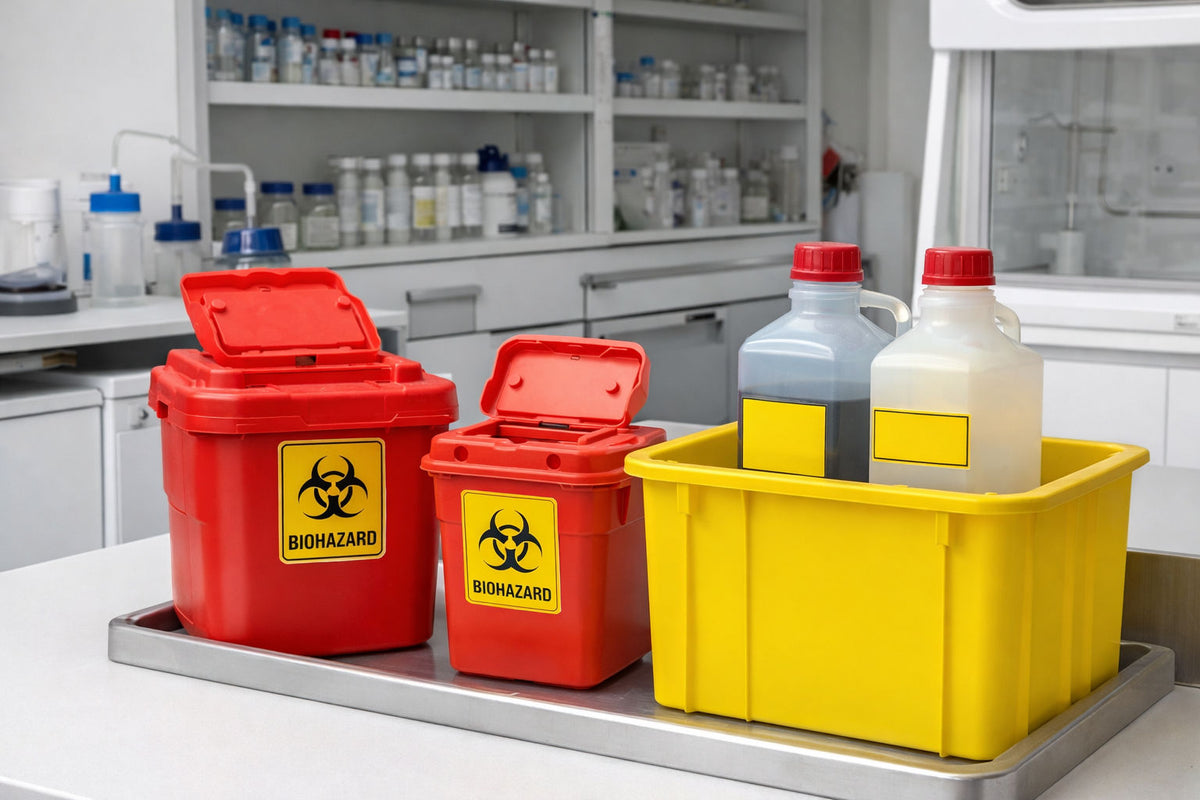
Laboratories generate different types of waste every day including chemical liquids, biological materials, sharps and contaminated consumables. Using the correct waste disposal container is critical for maintaining safety, preventing contamination and meeting regulatory compliance. Improper waste handling can lead to spills, exposure incidents and costly violations.
This article explains the most common waste disposal container types used in laboratories, their applications and how to choose the right solution for your lab.
Biohazard Containers for Biological and Infectious Waste
One of the most essential waste disposal solutions in laboratories is biohazard containers. These containers are specifically designed to safely collect and store biological waste that may contain infectious agents.
What goes into biohazard containers
Contaminated gloves and PPE
Culture plates and petri dishes
Pipette tips and disposable labware
Biological samples and absorbent materials
High quality biohazard containers are manufactured using puncture resistant, leak proof materials and autoclavable or incineration-compatible materials to prevent accidental exposure. They are typically color coded and clearly labelled to meet biosafety standards.
Using approved biohazard containers reduces the risk of cross contamination and ensures safe handling during collection, transport and disposal.
Secondary Waste Container for Spill Control and Compliance
A secondary waste container plays a critical role in laboratory safety by providing an added layer of protection. These containers are used to hold primary waste containers and capture leaks or spills.
Why secondary waste containers are important
Prevents chemical leaks from spreading
Protects lab surfaces and equipment
Helps labs comply with safety regulations
Reduces cleanup time after accidental spills
A secondary waste container is commonly used under liquid waste containers, solvent bottles and hazardous chemical storage units. In labs handling corrosive or volatile substances, secondary containment is not optional but required.
Choosing the correct secondary waste container improves lab organization and significantly lowers the risk of exposure.
Liquid Waste Disposal Containers for Chemical Waste
Liquid waste is one of the most common waste streams in laboratories. From solvents and reagents to cleaning chemicals, proper containment is essential.
Key features of liquid waste disposal containers
Chemical resistant materials
Secure sealing lids to prevent fumes
Wide openings for easy pouring
Compatibility with funnels and tubing
These containers are often paired with a secondary waste container to add another level of safety. Proper labelling is essential to prevent mixing incompatible chemicals which could result in dangerous reactions.
Using appropriate liquid waste containers improves daily lab workflow while maintaining safety standards.

Sharps Disposal Containers for Injury Prevention
Sharps waste includes needles, syringes, blades and broken glass. These materials pose a serious injury risk if not disposed of correctly.
Benefits of sharps disposal containers
Puncture resistant walls
Tamper resistant locking lids
Clear fill level indicators
Compliance with safety guidelines
Sharps containers are commonly used in medical, pharmaceutical and research labs. While not all sharps are biohazardous, many labs combine sharps disposal with biohazard containers to streamline waste segregation.

Chemical Waste Containers for Hazardous Materials
Chemical waste containers are designed for solid and liquid hazardous waste. These containers must be compatible with the chemicals they hold.
Common uses
Acid and base waste
Flammable solvent disposal
Reactive chemical residues
Lab cleanup materials
Using chemical resistant containers along with a secondary waste container ensures safe storage and transport. Proper chemical waste segregation reduces fire hazards and regulatory risks.
How to Choose the Right Waste Disposal Container
Selecting the correct waste disposal container depends on several factors.
Important considerations
Type of waste generated
Chemical compatibility
Volume of waste produced
Regulatory requirements
Lab workflow and space
Combining biohazard containers, liquid waste containers and secondary waste container solutions creates a safer and more efficient lab environment.
Why Buy Waste Disposal Containers from Labsafetyshop
Labsafetyshop offers a wide range of laboratory waste disposal solutions designed to meet modern lab safety requirements. Every product is built for durability, compliance and ease of use.
Whether your lab needs biohazard containers, liquid waste systems or secondary waste container solutions, Labsafetyshop provides reliable options trusted by professionals.
Explore laboratory waste disposal containers at Labsafetyshop and upgrade your lab safety today.
Frequently Asked Questions
What are biohazard containers used for
Biohazard containers are used to collect and store biological and infectious waste such as contaminated labware, PPE and biological samples.
Why is a secondary waste container necessary
A secondary waste container provides spill containment, protects lab surfaces and helps meet safety compliance requirements.
Can chemical waste be stored in biohazard containers
No chemical waste should be stored in containers specifically designed for chemical compatibility, not biohazard containers.
How often should waste disposal containers be emptied
Waste containers should be emptied before reaching fill limits to prevent spills and maintain safety.
Are waste disposal containers required by regulations
Yes, most laboratory safety regulations require proper waste segregation and approved disposal containers.


Leave a Comment