









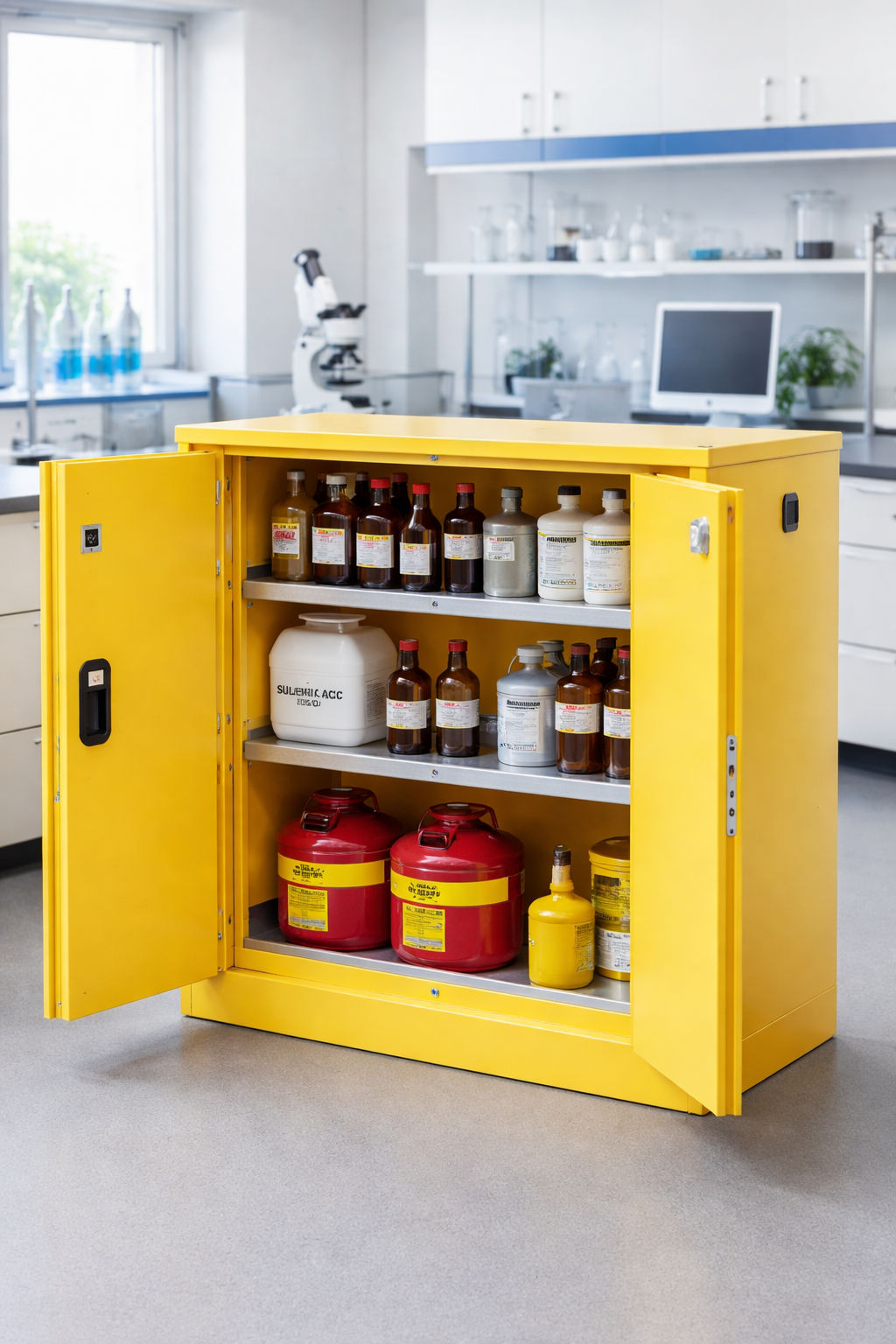
Laboratories handle hazardous chemicals daily, making proper storage a critical part of workplace safety. Choosing the right cabinet is not just about storage capacity. It is about meeting compliant cabinet standards, reducing risk, and protecting people, equipment, and the environment. Understanding what makes safety storage cabinets compliant and effective helps labs avoid violations, prevent accidents, and operate with confidence.
This guide breaks down the essential features, materials, certifications, and best practices that define high quality chemical storage solutions.
Understanding Compliance in Safety Storage Cabinets
Compliance starts with knowing what regulations apply to laboratory chemical storage. Safety cabinets must be designed to meet recognized standards that govern fire resistance, containment, ventilation, and chemical compatibility.
Key compliance requirements include
Fire resistance to slow the spread of flames
Spill containment to prevent leaks from reaching floors or drains
Durable construction that withstands chemical exposure
Clear labeling and identification
High quality safety storage cabinets are engineered to meet or exceed these requirements, ensuring they align with OSHA and NFPA expectations used in most laboratories.
When selecting cabinets, always verify that they are built to recognized compliant
Explore compliant options here Safety Storage Cabinets
2.Construction Materials That Ensure Long Term Safety
An effective safety cabinet starts with the right materials. Poor construction leads to corrosion, leaks, and compliance failures over time.
The most effective chemical storage cabinets typically feature
Double wall steel or chemical resistant polymer construction
Corrosion resistant coatings for acids and solvents
Reinforced doors with secure locking systems
Leak proof sumps to capture spills
Materials must be compatible with the chemicals being stored. For example, flammable liquid cabinets require steel construction with fire resistant properties, while corrosive storage often requires polyethylene interiors.
Choosing cabinets built specifically for laboratory use ensures both durability and regulatory alignment.
View chemical compatible storage solutions
3.Design Features That Improve Effectiveness
Compliance alone is not enough. A cabinet must also be functional for daily laboratory operations. Effective design minimizes human error and improves safety performance.
Important design features include
Self closing doors that automatically shut during emergencies
Adjustable shelving for proper container spacing
Venting options that align with lab safety policies
Secure latches that prevent accidental openings
Well-designed safety storage cabinets support organized chemical storage, reduce exposure risks, and make inspections easier. Poor design often leads to overcrowding, improper segregation, and increased accident potential.

Cabinets that balance compliance with usability are the most effective long-term investments.
4.Certification and Testing That Prove Compliance
One of the clearest indicators of quality is certification. Cabinets that meet compliant cabinet standards are tested for fire resistance, structural integrity, and spill containment.
Look for cabinets that
Are tested against recognized safety benchmarks
Provide documentation for inspections and audits
Support institutional and regulatory requirements
Certified cabinets reduce liability and simplify compliance reporting. They also demonstrate a lab commitment to safety culture and risk management.
Learn more about compliant chemical storage solutions
5.Proper Use and Maintenance for Ongoing Compliance
Even the best cabinet can fail if it is not used correctly. Proper installation, labelling, and maintenance are essential to keep chemical storage compliant over time.
Best practices include
Storing only compatible chemicals together
Never exceeding recommended capacity
Inspecting doors seals and sumps regularly
Training staff on proper cabinet use
Routine inspections help identify wear or damage before it becomes a safety issue. Maintaining safety storage cabinets is just as important as selecting the right model.
Why Choosing the Right Supplier Matters
Working with a trusted lab safety supplier ensures access to cabinets that meet real world compliance needs. At LabSafetyShop, products are selected to support regulatory alignment, durability, and laboratory efficiency.
From flammable storage to corrosive resistant solutions, LabSafetyShop provides chemical storage options designed for modern laboratories.
Browse compliant lab safety solutions at LabSafetyShop
Frequently Asked Questions
What are compliant cabinet standards for laboratory safety storage
Compliant cabinet standards typically include fire resistance, spill containment, material compatibility, and structural durability aligned with OSHA and NFPA guidelines.
Are safety storage cabinets required for chemical storage
Yes. Many hazardous chemicals require approved safety storage cabinets to reduce fire risk, prevent spills, and meet regulatory requirements.
How do I choose the right cabinet for my lab
Identify the type of chemicals being stored, review compatibility requirements, and select cabinets built to verified compliant cabinet standards.
Do safety cabinets require regular maintenance
Yes. Regular inspection ensures doors, seals, and containment features remain effective and compliant.
Where can I find compliant safety storage cabinets
LabSafetyShop offers a wide range of tested and compliant chemical storage solutions for laboratory environments.


Leave a Comment