




Here at Solventwaste.com, our motto is “Keeping Labs Safe.” To help us keep up with that motto, we offer a variety of Safety Cans and Containers ranging from plunger cans to Type II Safety Cans. If you need help telling the differences between these cans or containers, you’ve come to the right place.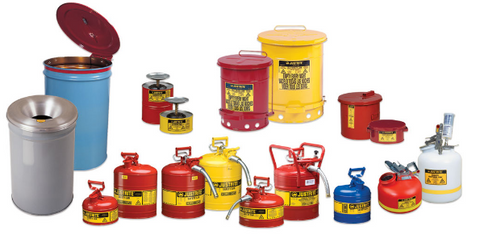
Type I Steel Safety Cans: These safety cans feature a single opening for filling and pouring flammable liquids. Type I Safety Cans are FM approved and OSHA compliant.
Type I Polyethylene Safety Cans: Just like the Steel Safety Cans, these Polyethylene Safety Cans feature a single opening for filling and pouring. These cans are made from high density polyethylene and they can withstand tough acids and corrosives.
Type II Safety Cans: Just like the Type I cans, these cans are FM approved and OSHA compliant. These cans feature two opening; one for filling and the other contains a flexible hose for a smooth and accurate pouring.
Laboratory HPLC Disposal Containers: These cans feature quick-disconnect fittings for high performance liquid chromatography applications. They are FM approved and OSHA compliant.
DOT Transport and Dispensing Cans: These cans are similar to the Type II Safety Cans. They are approved by the United Nations, US Department of Transportation and FM. They feature heavy roll bars for protection during transporting.
Waste Safety Disposal Safety Containers: These containers are approved by FM for discarding flammable and combustible wastes. The four main disposal containers are:
- Oily waste cans for solvent soaked rags
- Drum covers for combustible waste
- Cease-Fire® receptacles for paper waste
- Disposal cans for flammable waste.
Laboratory Dispensing Containers: These cans are available in steel or polyethylene. They feature faucets for dispensing into small containers. They are FM approved and OSHA compliant.
Bench Cans, Mixing Tanks, Swab Pail: These cans are used for mixing hazardous liquids or cleaning small parts. OSHA or EPA compliant.
Cleaning Tanks for Hazardous Liquids: These cans are FM approved. The three types are:
- Dip tanks and wash tanks for sub-assemblies and cleaning small parts
- Benchtop or free standing rinse tanks for cleaning larger parts