









Best Practices for Solvent Waste Management in Laboratories
Solvent waste management is a critical component of laboratory safety and regulatory compliance. Laboratories involved in chemical analysis, pharmaceutical development, biotechnology research, and industrial testing generate significant volumes of solvent waste during daily operations. Without proper management systems, solvent waste can present serious risks including vapor exposure, fire hazards, environmental contamination, and regulatory violations.
Implementing structured solvent waste management practices protects laboratory personnel, improves environmental responsibility, and ensures compliance with safety regulations.
Understanding the Risks of Solvent Waste

Solvents used in laboratory processes often contains carcinogenic volatile organic compounds (VOCs) and flammable chemicals. Common laboratory solvents such as acetonitrile, methanol, acetone, and ethanol produce vapors that can accumulate in enclosed laboratory spaces if waste systems are not properly controlled.
Improper storage or disposal of solvent waste can lead to several operational and safety issues including:
Exposure of laboratory personnel to chemical vapors
Increased risk of fire in flammable solvent environments
Contamination of laboratory workspaces
Improper segregation of hazardous waste streams
Regulatory non-compliance related to chemical disposal
Laboratories must therefore implement systems that contain vapors, prevent spills, and support safe handling of liquid chemical waste.
Proper Waste Containment Systems
Effective solvent waste containment begins with selecting appropriate waste collection containers. Containers should be chemically compatible with the solvents being disposed and designed to prevent leakage or vapor release.
In many analytical laboratories, particularly those using chromatography systems, waste solvents are continuously generated during instrument operation. Without dedicated containment systems, vapors can escape from open containers and impact laboratory air quality.
Closed solvent waste containers and engineered waste systems provide several advantages:
Reduced vapor exposure in laboratory environments
Improved containment of hazardous liquids
Controlled transfer of solvent waste from instruments
Safer temporary storage before disposal
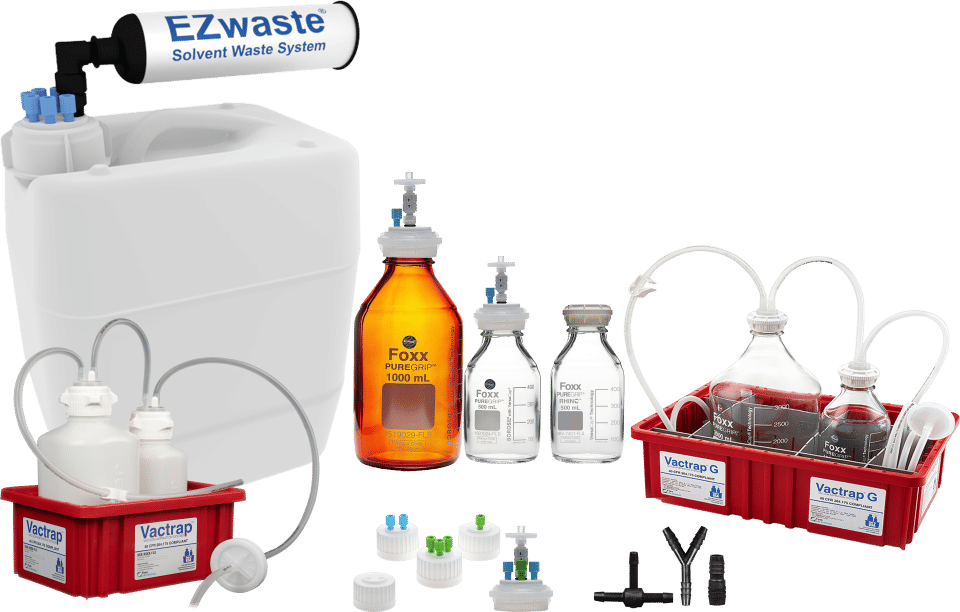
Laboratories increasingly rely on purpose built solvent waste systems that integrate directly with analytical instruments and waste collection workflows.
Vapor Control and Safety Funnels
One of the most common safety challenges in solvent disposal occurs during manual waste transfer. Pouring solvents into open containers can release vapors and increase the risk of splashing or accidental exposure.
Engineered safety funnels and controlled waste funnels are designed to reduce these risks. These systems help manage liquid transfer while limiting vapor release into the laboratory environment.
Safety funnels typically include features such as controlled lids, flame arresting components, and vapor reducing mechanisms that improve laboratory safety while maintaining convenient waste disposal practices.
Implementing proper waste transfer solutions also helps laboratories maintain organized chemical handling procedures.
Secondary Containment and Spill Prevention
Accidental spills remain one of the most frequent laboratory safety incidents associated with solvent waste. Secondary containment systems provide an additional layer of protection by capturing leaks or spills before they spread across work surfaces or floors.
Secondary containers and spill control platforms are especially important when storing solvent waste containers near analytical instruments or laboratory benches.
Key benefits of secondary containment systems include:
Prevention of solvent spread in case of container failure
Protection of laboratory surfaces and equipment
Improved compliance with laboratory safety protocols
Enhanced spill management and cleanup
These systems are widely used in research laboratories, pharmaceutical production facilities, and quality control environments where solvent handling is routine.
Compliance and Laboratory Safety Programs
Laboratories must comply with strict regulations related to chemical handling, hazardous waste storage, and environmental safety. Proper solvent waste management is a central component of these regulatory frameworks.
Implementing best practices such as closed waste systems, proper labeling, compatible storage containers, and spill containment equipment helps laboratories meet regulatory expectations and maintain safe working conditions.
Building Safer Laboratory Waste Systems
Modern laboratories are increasingly adopting integrated safety solutions to manage solvent waste efficiently. Combining proper containers, vapor control systems, secondary containment, and organized disposal practices creates a safer laboratory environment for personnel.

At LabSafetyShop.com, laboratories can access a wide range of solvent waste management systems, safety funnels, secondary containment solutions, and chemical safety equipment designed to support safe and compliant laboratory operations.


Leave a Comment