




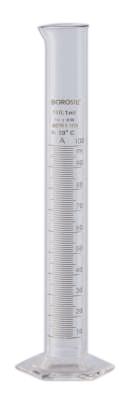
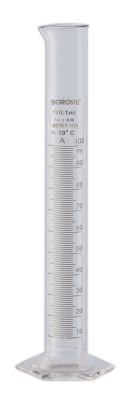
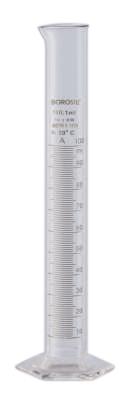
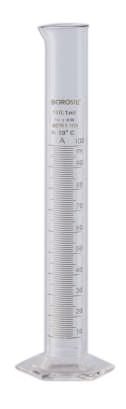
Glass CylindersGlass Cylinders — related categoryGlass Cylinders — related categoryGlass Cylinders — related categoryGlass Cylinders — related category

Glass Cylinders

1 subcategory

Laboratory Glass Graduated Cylinders for Accurate Liquid Measurement

Explore a range of high-quality laboratory glass graduated cylinders designed for measuring, preparing, and transferring liquid volumes in research, pharmaceutical, biotechnology, analytical, educational, and industrial laboratories. These essential volumetric instruments feature clearly marked graduation scales for reliable liquid measurement during routine laboratory procedures and quantitative analysis.

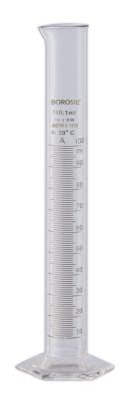
At LabSafetyShop, find borosilicate glass measuring cylinders in different capacities, including Class A and Class B accuracy options. Available configurations include stable hexagonal bases, graduated measurement scales, and selected models with batch or individual calibration certificates. Borosilicate glass provides good chemical resistance and thermal stability for compatible laboratory applications.

Whether you're measuring reagents, preparing chemical solutions, conducting quality control tests, or selecting calibrated laboratory glassware, LabSafetyShop makes it easier to source dependable laboratory graduated cylinders with high-quality products, convenient online ordering, and quick delivery.

Recently Viewed

Still Comparing? Your Recently Viewed

Products you recently checked out

Related FAQ

Glass Cylinders FAQ

Frequently asked questions about this collection.

What are laboratory glass graduated cylinders used for?

Laboratory glass graduated cylinders are used to measure and transfer liquid volumes during sample preparation, reagent mixing, chemical analysis, and routine laboratory testing. Their graduated scales allow users to measure different liquid volumes within the cylinder's specified capacity and accuracy.

What types of glass measuring cylinders are available at LabSafetyShop?

LabSafetyShop offers borosilicate glass graduated measuring cylinders, including Class A and Class B options. Available configurations include hexagonal-base cylinders, different measurement capacities, and selected models supplied with batch or individual calibration certificates.

What is the difference between Class A and Class B graduated cylinders?

Class A graduated cylinders are manufactured to tighter volumetric accuracy tolerances than corresponding Class B cylinders under applicable standards. Class A cylinders are generally preferred for measurements requiring higher accuracy, while Class B cylinders are commonly used for routine laboratory work where wider tolerances are acceptable.

Why are borosilicate glass graduated cylinders used in laboratories?

Borosilicate glass measuring cylinders offer good chemical resistance, thermal stability, and clear visibility of liquids and graduation markings. They are commonly selected for laboratory measurements involving compatible reagents and solutions.

What is the difference between “to contain” (TC) and “to deliver” (TD) measuring cylinders?

To contain (TC) cylinders are calibrated to hold a specified volume of liquid. To deliver (TD) cylinders are calibrated to dispense a specified volume under defined drainage conditions. Users should select the appropriate calibration type based on their measurement procedure and required accuracy.

How do I choose the right laboratory glass graduated cylinder?

Choose a graduated cylinder based on measurement capacity, graduation interval, accuracy class, calibration type, chemical compatibility, and certification requirements. For more precise measurements, select a capacity close to the volume being measured and verify the instrument's specified tolerance.