Borosil3840016
Borosil® Soxhlet Extraction Apparatus with Allihn condenser - I/C joint 100 mL
Sale
MSRP
$219.08
Sale
$206.91
You pay







Sign Into
Log in for these benefits:
New Customer? Register Now
Search
Direct match
Suggested searches
Best match
Start typing to search products, brands, and categories.
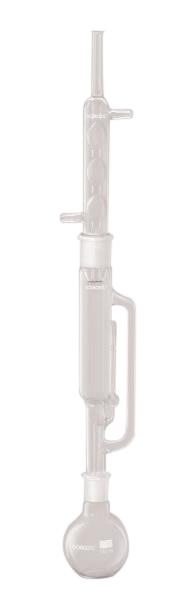
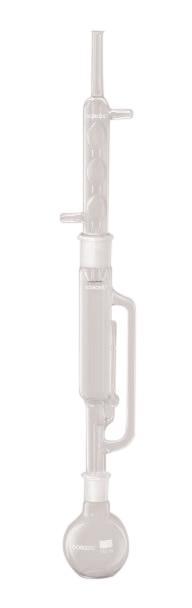
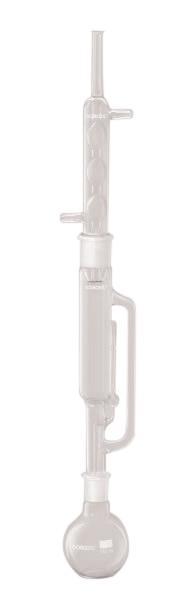
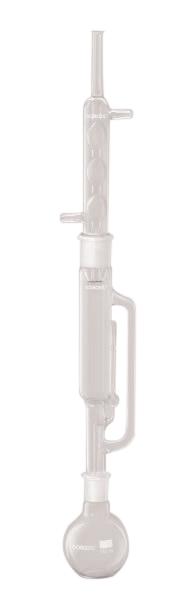
Explore laboratory Soxhlet extraction apparatus designed for repeated solvent extraction of soluble compounds from solid samples. Soxhlet extraction is a widely used laboratory technique in analytical chemistry, pharmaceutical research, food testing, environmental analysis, and quality control. By repeatedly washing a sample with condensed solvent, a Soxhlet extractor enables extraction without continuously replacing the solvent manually.
At LabSafetyShop, discover borosilicate glass Soxhlet extraction apparatus with Allihn condensers in a selection of laboratory-scale capacities. These assemblies use a reflux-based extraction process in which heated solvent vapor rises into a condenser, returns as liquid to the extraction chamber, and periodically siphons back into the boiling flask. The Allihn condenser provides an extended condensation surface to support effective solvent reflux.
Available configurations include 100 mL, 200 mL, 500 mL, and 2 L extraction apparatus, with selected assemblies supplied with compatible boiling flasks. Interchangeable glass joints provide flexibility when assembling the appropriate extraction setup.
Whether you're preparing samples for chemical analysis, extracting soluble compounds from solid materials, or performing routine laboratory solvent extraction, LabSafetyShop offers dependable glass Soxhlet extraction equipment for compatible laboratory workflows.
Select the appropriate extraction capacity, flask size, glass joint configuration, solvent compatibility, and heating arrangement for your application. Use suitable ventilation and heating equipment when working with volatile or flammable solvents.
Explore the family
Products you recently checked out
Frequently asked questions about this collection.
No products found in this category.
No products found in this category.
…